Law Students from Small Nations Make a Big Difference

Yes, law students can make a difference — a big one as it turns out.

Last Sunday’s New York Times magazine was devoted to the issue of climate change. Included in the coverage was an article about law students, attending law schools in island nations, who had taken up the climate change cause after witnessing how climate change continued to ravage their homelands. They took their grievances to the highest court on earth and were successful.

In 2019, law students from Tonga and the Solomon Islands, among other island nations, organized to address a lasting solution to enforce international cooperation on climate change. The Paris Climate Accords had not proved effective, and the students wanted a result with the teeth of the rule of law. Their answer was to petition the United Nations General Assembly for recognition of a cause of action based on human rights and the responsibility of UN member nations to do no harm by ignoring the effects of climate change on their own citizens and those of neighboring countries. Four years later, in March 2023, the General Assembly unanimously found in their favor, and the next stop for the students was the International Court of Justice (ICJ) at The Hague in the Netherlands.

In December 2024, those students were among 96 countries and 11 international organizations addressing the ICJ with their grievances. In recognition of their years-long fight for the cause, the first speakers were the students, who, by that time, were full blown lawyers pursuing equally compelling causes in their home countries. Six months later, in July of 2025, the ICJ issued an advisory opinion that the full gamut of international law applies to climate change and that countries have a duty, founded in human rights, to prevent environmental harm caused by emitting greenhouse gases and can be held legally accountable for failure to exercise that duty.

It is an amazing and inspiring story, and I felt better about the world just reading it. Most of all, it confirmed my faith in young lawyers and their abilities to make differences that are needed across the globe. The just causes for making a difference are legion, and the work is rewarding. Whether that work is prosecuting felons, assuring access to the voting booths, fighting for the rights of field workers or countless other causes that need addressing, it is good work and it gives back by feeding the souls of those who labor in the trenches.

That “good work” may have special appeal for young lawyers who are not cut out for large law firm practice. The choice for good work also might appeal to those young lawyers who are not satisfied with making more money for clients who already have more than they can spend.

ASK YOURSELF how you can make a difference and whether you want to — a difference perhaps not as globally significant as battling climate change but certainly important to discrete constituencies. Think about it. Try on the possibility and see if it fits.

If it does, I hope that it will be as enriching for you as it was for my father, my husband, myself and our son and daughter for portions of our legal careers. Generally speaking, those were the most satisfying years of our practices and helped to develop who and what we became as lawyers.

The differences you can make will never leave you.
Career Counselors, Law School Educators, Law Students, Practice Advice, Pre-law, Young Lawyer | Comments Off on Law Students from Small Nations Make a Big Difference

The Dangerous Quest For Perfection

Perfectionism, the plague for many law practitioners, is something I have written about before. My consistent bottom line has been that perfectionism for lawyers is dangerous to their well being. My mantra has been Do Not Sacrifice Good on the Altar of Perfect.

Having said that, I know that it is much more complicated than a slogan or a mantra. The practice of law is fraught with multiple critics: Clients, colleagues, supervising lawyers, and judges among them. They all want the perfect lawyer, and they all can be very hard on those they perceive as falling short of that standard.

A recent study from Krill Strategies, Ambition Profile and NALP (National Association For Law Placement), as reported on by Above the Law and commented on by Vivia Chen on her Ex-Careerist forum, makes the dangers of perfectionism more clear than ever before. Based on a survey of 764 lawyers, that study identifies the price of perfectionism as stress, depression, workaholism, resistance to feedback, and reduced engagement, motivation, and longevity. The underlying data demonstrates that among lawyers, who scored high on the perfectionist scale, 50.6% showed elevated depression compared to 7.1% in the low-perfectionism group. Perfectionist lawyers also tend to have shorter tenures at their firms: 5.3 years, compared to 8.4 years for low-perfectionists. And, unsurprisingly, women reported higher levels of perfectionism and stress.

In the NALP article reporting the survey results, the emphasis is on both the mental health challenges faced by perfectionist lawyers and the institutions that foster those challenges. The article includes recommendations for mitigating the negative effects of perfectionism on both the individual and institutional levels — without compromising work quality. The challenge in eradicating the dangers of perfectionism is for both the individual lawyers and the law organizations which employ them. Perspectives and behaviors will have to change to reduce the demand for perfect performance and protect practitioners.

For most people, the pursuit of perfection is unhealthy and dangerous. There always will be those among us who can easily meet that standard without harm, and we all will recognize them. For so many others, however, “excellent” and “very good” performance should be rewarded in ways that do not relegate that performance to secondary positions and create the expectations for more.

Being all that they CAN BE without experiencing harm is a much healthier goal for young lawyers, especially, and will lead to more genuine satisfaction in both professional and personal lives.

Career Counselors, Law Firm Managers, Law School Educators, Law Students, Practice Advice, Pre-law, Young Lawyer | Comment

Be Interested in Your Work but Don’t Hold Out for Passion

I have written about this subject before. And as you will see, I have changed my mind along the way.

Passion for what interests you can be a very motivating factor. But it does not apply to everything that is important in your life. For years, I thought that passion for the law or for a particular practice within the law was a necessary goal for professional success. I wrote about it and lectured about it scores of times. And then one day I stopped doing that.

That day I realized that passion for your work is not necessary for you to be successful in your work. It coincided with the time when society became so confrontational in so many venues, including the professions. Stresses like confrontation have a way of chilling passion. However, dialing down the expectation from passion to interest does not mean that you do not enjoy your work. It means that you are realistic about your professional expectations.

Today I reserve passion for my personal life and I am disappointed a lot less often in my working life. My personal life involves the things I love and the people I love. My personal life is also where I find the joy that fuels my passion to continue to seek more joy. It is where I am joyful just looking at my children’s and grandchildren’s faces, joyful about my relationships with other loved ones and friends, joyful about my opportunities to have so many different experiences and to learn so many things that make life not just endurable but extraordinarily wonderful.

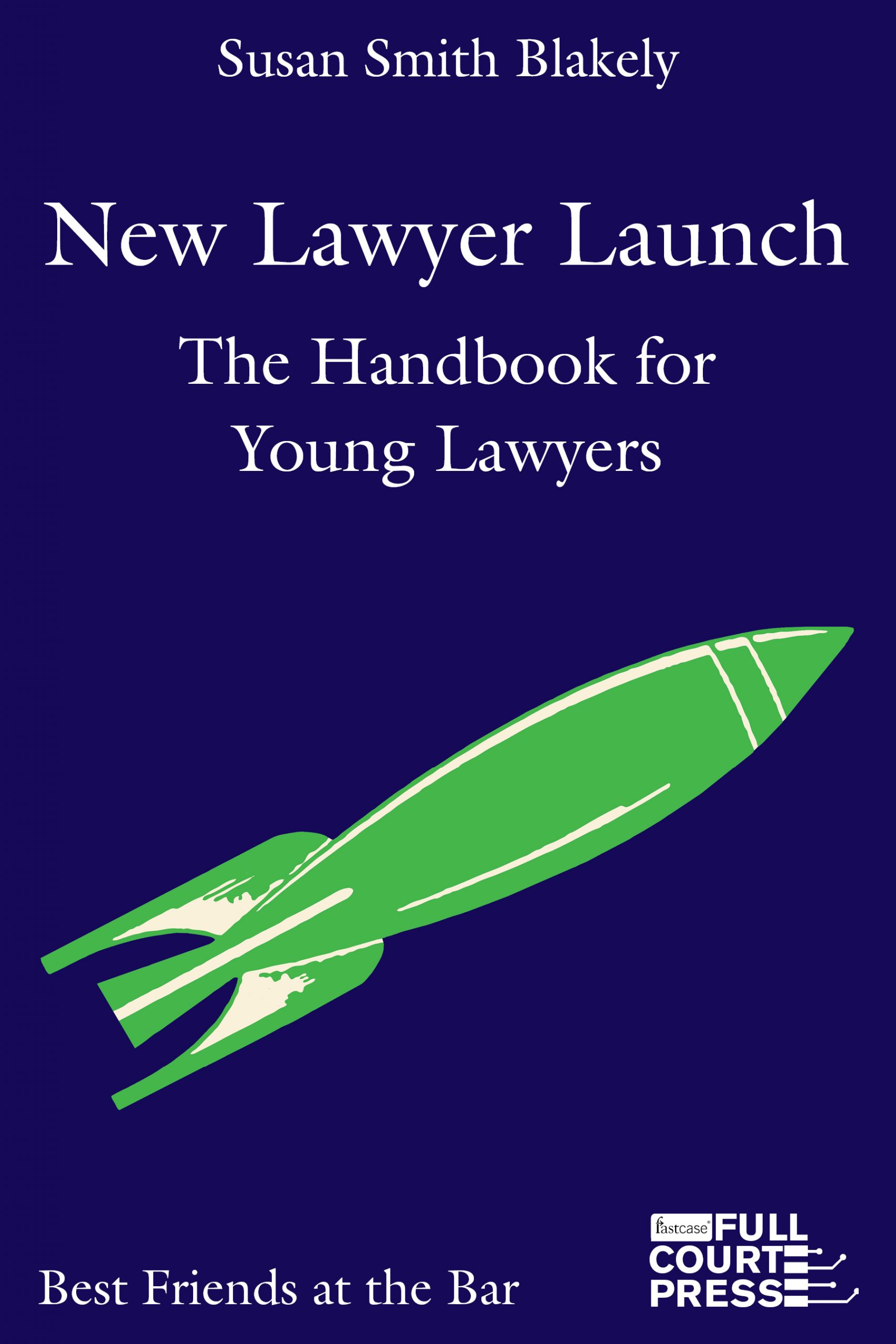
I discuss this in my book, New Lawyer Launch: The Handbook for Young Lawyers (Full Court Press, 2023) where I distinguish passion for your work from work satisfaction. We need professional satisfaction for our work and the benefits it confers, like compensation, health insurance and social standing, but we can stop short about being passionate about those things. Passion is an investment, and it is easy to set yourself up for disappointment if you overplay the importance of passion about your law practice. Think twice before you take that leap.

Last weekend I was having dinner with a dear friend. She and I met more than twenty years ago in a leadership training program, and I have enjoyed her friendship so much over the years. She had a very successful career in the law, which culminated in her position as general counsel at a large international energy exchange. I never fully understood what she did in that job, but I knew she did it very well.

My friend retired last year, and my conversation with her last weekend was about that decision. She said it was simple. She had done work for years that was extremely interesting to her, and she had become an expert on discrete areas of the law. That was energizing to her, and she was confident that her expertise was very important to her client. However, that experience was followed by the necessity to become equally as conversant in another area of the law for which she had no interest. She knew right then and there that it was time to leave. She did not want her future experiences to sully the memory of her past when her work held great interest and enjoyment for her. Not passion. Interest and enjoyment.

I know that many of you do not have the option of retiring. You are far too young for that. But you do have the option of assuring that you have adequate interest in the jobs you do so that working is not just a chore. The law is a very multifaceted profession. If you value your enjoyment enough you should be able to find a kind of law or discipline within the law that interests you. The kind that does not include doing the job just to get promoted or doing the job just to prove yourself better at it than others or doing the job just for the rush of recognition, control and power. Those things alone rarely lead to professional satisfaction. However, assuring interest in your work can achieve some of the same results and avoid burn out, unhealthy competition and disappointment.

It is simple. Be interested in what you do professionally or do something else. Just don’t get hung up on the passion. Save that for your personal life. And don’t be afraid of change. You need to welcome change as part of the process of becoming what you want to be.

Career Counselors, Law Firm Managers, Law School Educators, Law Students, Practice Advice, Pre-law, Young Lawyer | Comments Off on Be Interested in Your Work but Don’t Hold Out for Passion

Is the Legal Profession on a Slippery Slope?

I have been a part of the legal profession for more than 45 years, and I was raised by a very successful and ethical lawyer before that. In observing the law profession for all of that time, and I have liked what I saw. But now, I am truly stymied.

Consider these things. Recently I reported on a summer associate’s proclivity for biting colleagues. It was truly unbelievable that any person could be affiliated with the legal profession and think that kind of behavior was acceptable in a law firm — or anywhere else for that matter. Prior to that I wrote about law firms cooperating with executive branch mandates which those very firms typically would have deplored. And this week I am reading about a convicted felon, a robber of multiple banks to be specific, who, after serving his prison time, attended and graduated from law school, became an advocate for prison reform (to include an appearance at the Trump White House), was convicted last week of spousal abuse and is being held in confinement until sentencing. That’s a very significant fall from grace. You can read more about it here:
https://abovethelaw.com/2025/07/prominent-georgetown-law-professor-convicted-in-domestic-violence-case.

I must admit to being particularly disappointed and shocked by this last discovery. This twice-convicted felon is a graduate of my law school and served as a professor there before his fatal flaws surfaced again. Georgetown Law, where I was both a student and a teaching fellow, where I was molded by the beliefs of the Jesuits, and where I lectured on more than one occasion about the challenges for women lawyers, is a special place for me. This should not have happened to sully its reputation.

So, what does all this say about the profession of law? These kinds of absurd things did not used to happen, and it makes me wonder whether the legal profession is on a slippery downward slope. I hope not, but I am bothered by what has happened to our judgment as lawyers and to our ethical considerations and our ability to weigh facts against smoke and mirrors. I am bothered by what is happening to our legal institutions, some of which have cooperated with baseless executive branch mandates to the detriment of their students and their alumni. I am bothered about what is happening to our highest court in cases involving established law when blind eyes are turned to sacred protections clearly written in the Constitution.

If what I see is truly happening, something has to be done to make a difference and right this sinking ship. And it has to be done by us, the members of this profession who have not forgotten the axioms underlying the profession that once were held sacred. We must have the courage to deny convenience and the pleasure of saving our own skins and choose the right thing to do. The right thing to do has not gone out of style. It has just gotten lost in the shuffle, and it must be discovered once again.

I am reminded of Shakespeare’s character Dick the Butcher and his famous words in promoting a coup against King Henry, “The first thing we do, let’s kill all the lawyers.” If things continue to decline in the profession of law, that might no longer be necessary. How tragic would that be?

Career Counselors, Law Firm Managers, Law School Educators, Law Students, Practice Advice, Pre-law, Young Lawyer | Comments Off on Is the Legal Profession on a Slippery Slope?

Biting Colleagues and Other Toxic Workplace Behaviors

So you probably think I am kidding about biting. Not so. As reported by Above the Law and other sources, a summer associate at Sidley in NYC recently lost her position for biting colleagues. Not once, not twice, but a series of bites. It seems totally unbelievable, but, alas, it is the most recent in toxic law firm behaviors.

Although other bad behaviors may pale by comparison to the bitathon at Sidley, those other behaviors are worth mentioning because toxic behaviors are, unfortunately, far too familiar at many firms. The combination of stress, time constraints and competition is rife for bad behaviors. A lot is expected by supervisors, by clients, and by other outside controllers, and it can lead to unfortunate outcomes in terms of personal behaviors. Belittling and other rudeness, bullying, name-calling, gossiping, spreading rumors, refusal to collaborate and other forms of disrespect are easy to spot and need to be dealt with before they get out of control.

It is just another thing for law firm leaders to address, but address it they must. Because if left unaddressed, toxic behaviors can negatively affect morale. And low morale can lead to low retention.

Toxic behaviors are not limited to junior lawyers. Toxic behaviors by senior lawyers include narcissism, micromanagement, blame-shifting and passive-aggressive attitudes. Addressing bad behaviors by top-performing partners is particularly dicey, but it must be done because too many people will suffer if it is allowed to continue. That means that law firm leaders need to police their own ranks.

Addressing toxic behaviors is part of assuring healthy work environments and cultures of wellness. It is always worth the time and attention it requires. Encouraging an environment of approachability is important so that individual lawyers know if they see something to say something. Establishment of impartial processes for fact finding and avoidance of pre-judgment are additional important steps toward protection of the workplace.

All lawyers and support staff are entitled to work environments that bring out the best in them and in others. I think we can agree that biting colleagues definitely does not accomplish those goals. It is one toxic behavior you definitely should avoid.

Career Counselors, Law Firm Managers, Law School Educators, Law Students, Practice Advice, Pre-law, Young Lawyer | Comments Off on Biting Colleagues and Other Toxic Workplace Behaviors

The Blow Back on BigLaw Gets Even Worse

I have written before about the departures from BigLaw in response to overreaching by the Trump Administration and its Executive Orders. Those departures have been dramatic, to be sure, but the drama was generally limited to the departure of a lawyer here and a lawyer there. Until now.

The recent departure of at least seven Wilkie Farr lawyers — all partners — from the San Francisco and Los Angeles offices as a reaction to the firm’s cooperation with the administration on issues of DEI and pro bono representation, is the biggest protest of its kind so far. The departure from Wilkie to Cooley, a firm that has not cooperated with Trump but also is fighting for the rule of law by representing Jenner & Block in its challenge to Trump, is so significant that it just might inspire similar departures from other firms.

Some might think that it is a little late for such departures. But that is clearly not true. Partners in law firms do not depart without a lot of untangling and preparation to continue careers they have worked hard to develop. Those things take time, in most cases more than a few weeks or months. And doing it with every “i” dotted and “t” crossed and each ethical box checked is, as most partners know, the only way to do it. In the case of the Wilkie Farr departing partners, this kind of departure by a group of lawyers had to be predicated by finding a new home where the “sins” of their past firm would not be repeated. That may take the most time of all, and it appears that the objective has been accomplished.

It will be interesting to see just how Wilkie Farr recovers from the departure of senior lawyers whose practices include top Silicon Valley tech clients. Those practices apparently gave rise to the establishment of the San Francisco office, so the impact could be significant. At least, it will provide another chapter in the book about the risks to private practice of cooperating with government/political mandates — which I am sure someone is writing at this very moment in time.

Another interesting part of this saga is that it started with Wilkie Farr junior lawyers. According to Above the Law, Wilkie Farr associates first approached partners and made it clear that those associates would be leaving in protest to the firm’s actions in capitulating to the Executive Order. Although the associates have not departed yet, the expectation is that they will leave soon. Those expected departures will bring the total number of departed Wilkie Farr lawyers to 20. No small impact.

Again, I repeat words from a prior blog, “The kids are at it again.” Don’t ever tell me that associate lawyers are powerless.

Keep your eye on these particular departures and other activity among BigLaw lawyers. With all of the turncoat, intrigue, changing alliances, and abandonment of principles and values, it brings to mind the words of Dr. Martin Luther King:

“Cowardice asks the question, ‘Is it safe?’ Expediency asks the question, ‘Is it politic?’ Vanity asks the question, ‘Is it popular?’ But, conscience asks the question, ‘Is it right?’ And there comes a time when one must take a position that is neither safe, nor politic, nor popular, but one must take it because one’s conscience tells one that it is right.”

What is right should be our North Star in these trying times.

Career Counselors, Law Firm Managers, Law School Educators, Law Students, Practice Advice, Pre-law, Young Lawyer | Comments Off on The Blow Back on BigLaw Gets Even Worse

Why Didn’t I Think of That?

In 2023, my most recent book in the Best Friends at the Bar series was released by Full Court Press, an imprint of Fastcase, Inc. New Lawyer Launch: The Handbook for Young Lawyers is a self help book to keep young lawyers from tripping over themselves on their way to success. With chapters like “You’re a Lawyer Now — What Does That Mean?” and “Developing Strategies for Survival and Success”, the book did the important business of familiarizing recent law graduates with the pragmatic Do’s and Don’ts of law practice — the thing law schools have never done well.

The advice in the book is straight forward, honest and helpful according to readers. However, in today’s world, it turns out that I omitted some very important things. Maybe I did not think of those things because the publication date was two years before our country inaugurated its 47th president and entered into a litany of unexpected events impacting lawyers and law firms.

So, what would a handbook for young lawyers look like if it were written today? Looking back, here is some of the advice I wish I had known to include in the book:

Do not make open-ended deals with the devil to save a few law firm bucks;

Do not promise to do pro bono work for clients chosen by the White House;

Do not continue to work for a firm that participates in the above;

Do not pursue civil service unless you are prepared to lose your job within the first few months at the hand of a chain saw “genius”;

Do not expect an informative debate with the Administration on issues of constitutional law (especially anything to do with the Emoluments Clause or Due Process) unless you enjoy hitting your head against a wall and setting yourself on fire;

Do not anticipate a presidential pardon unless you have “connections” and/or millions of dollars to sweeten the deal; and

Do not abandon your values and beliefs even if you become unemployed and homeless due to one or more of the above circumstances.

Of all the advice I could have offered, that may have been the most important. But, I did not have a crystal ball — and, if I had, I likely would be writing this blog from an island somewhere in the Caribbean, far from the madding crowd, waiting for a resurgence of respect for the US Constitution and a return to government for the people.

So, if you purchased the book, please make margin notes in the Table of Contents to include those additional words of wisdom. Who knows, that book might end up in a time capsule one day, and you will want to be remembered as prescient. That would not be such a bad legacy —- but it will not be mine.

Career Counselors, Law Firm Managers, Law School Educators, Law Students, Practice Advice, Pre-law, Young Lawyer | Comments Off on Why Didn’t I Think of That?

A REAL Leader is Lost at a Critical Time in History

I’m not a catholic, but I feel deep sadness when I think about the passing of Pope Francis earlier this week. I don’t have to be catholic or even Christian or even a member of any faith to feel this pain. It is not a good time for the departure of such a good man. The world, especially during the current turmoil, needs steady and humane hands.

Pope Francis stood for everything we need in a leader right now. Like fairness and kindness and honesty and love and humility in feeding the poor and lifting up the most vulnerable. He did not want to be in the spotlight. He wanted to shine the spotlight on persons and issues that needed it most. When I think about his commitment to saving the planet, I think it is no coincidence that he left this earth only days before the celebration of Earth Day 2025.

What, you say, does this have to do with law and lawyers? A lot I think. Fairness (as in the imperative for due process), protecting the helpless (as in pro bono representation), honesty (as in ethical behavior), and kindness, as in the Pope’s oft-stated “Who am I to judge?” Yes, kindness. Lawyers need to be kind. It is one of the virtues that allow them to thrive in a very contentious and demanding profession.

Pope Francis was a Jesuit, and that also means a lot to me. My husband and I both are graduates of Jesuit law schools, and the teachings of the Jesuits imbued our educations there. Perhaps it had something to do with our choice of public service for parts of our careers. The “Four Cs” of Jesuit education are Competence, Conscience, Compassion, and Commitment. Since founding their first school in 1548, the Jesuits have believed that a high-quality education is a path to a meaningful life of leadership and service.

Leadership is key. Leading with the goal of benefiting others is an imperative for a stable and thriving nation and world. Leading without malice and with love is the path that most often has led to prosperity and peace.

In consideration of the kind of leadership demonstrated by the life of Pope Francis, so many citizens of the world are mourning this week and regretting that the current leadership of our beloved United States of America appears to have gone off the rails. Could there be a starker contrast between Pope Francis and those in American politics who call themselves “leaders” — who are content to let Rome burn while they play their precious violins? Who are content while aggressively hurting so many helpless people here and abroad — taking government jobs away without warning or process, endangering 401Ks and other investments to support retirement, targeting immigrants with deportation/imprisonment without due process, or threatening to see people die of AIDS by the millions in Africa rather than reaching out helping hands for a mere 12 cents a day per child, and imposing tariffs that threaten the economic security of countries across the globe. This is our current reality.

A similar reality was played out beautifully on stage last night as I enjoyed the Washington Ballet’s performance of Alice in Wonderland. It struck me that the Queen of Hearts, with her yen for absolute rule, fear, and the arbitrary nature of authority, is being played out as the King of Hearts in our country right now.

The arts so often speak the truth and are harbingers to dangerous outcomes. My comfort lies in having witnessed the other side of power, as exemplified by Pope Francis.

May he rest in peace.

Career Counselors, Law Firm Managers, Law School Educators, Law Students, Practice Advice, Pre-law, Young Lawyer | Comments Off on A REAL Leader is Lost at a Critical Time in History